Classic fear-mongering, should stop selling panic: BJP slams Rahul Gandhi over ‘economic tsunami’ remark
Despite facing multiple black swan events, India has continued to remain the world’s fastest-growing major economy, Amit Malviya said.
The Congress-led UDF has registered a major win in Kerala, marking an end to Pinarayi Vijayan-led LDF’s rule.




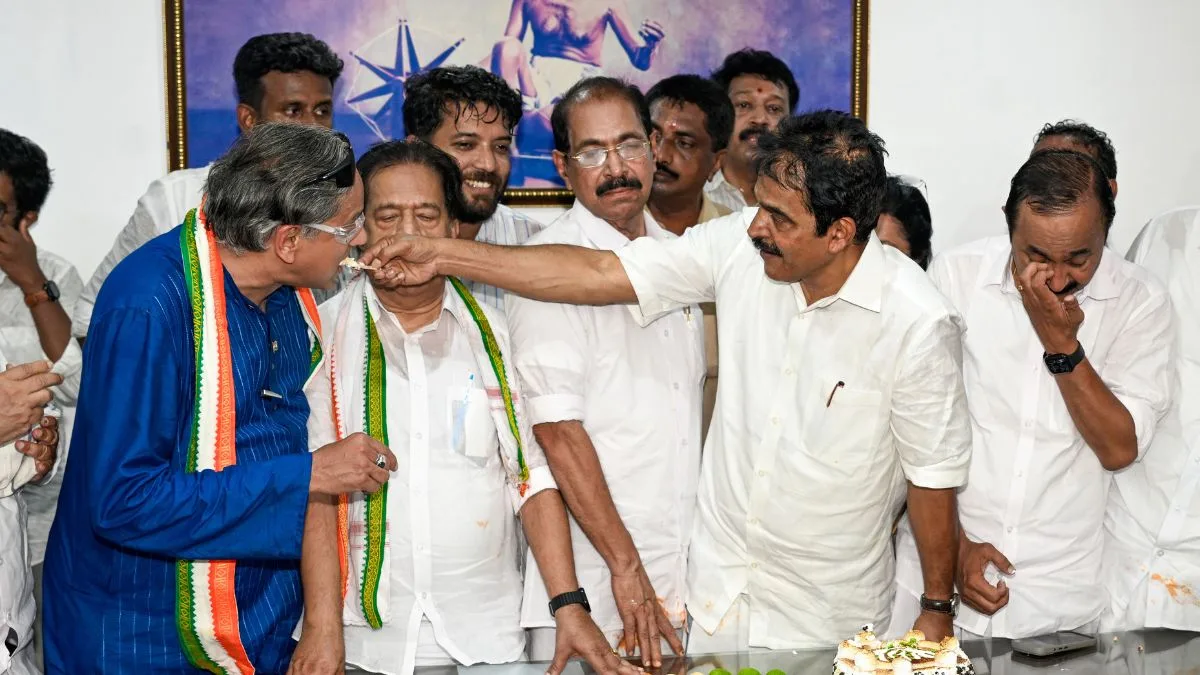
Image: IANS
As the United Democratic Front (UDF) prepares to return to power in Kerala, public attention has largely centred on high-visibility campaigners and the unresolved question of leadership. Yet, much of the organisational work that underpinned the Congress-led alliance’s revival took place away from the spotlight, AICC general secretary (organisation) KC Venugopal playing a key coordinating role.
Unlike previous election cycles, when the Congress often appeared reactive to the Left Democratic Front’s (LDF) narrative, the party began preparations well in advance. Central teams were deployed early, and there was a conscious attempt to shape the campaign around welfare-oriented messaging, including the so-called “guarantee” framework that had been tested in other states.
Advertisement
Venugopal’s stressed on the ‘Indira Guarantees’ as a counter to LDF’s developmental narrative.
Advertisement
Another paradigmatic shift in Kerala was Venugopal’s emphasis on winnability and local feedback so far as candidate selection was concerned, moving away from Congress’ traditional reliance on seniority and factional influence.
Surveys and internal assessments were used more systematically, though such exercises remain imperfect and often contested within party ranks. Venugopal himself maintained a visible presence on the ground, holding a large number of public interactions that doubled as feedback mechanisms for the central leadership.
One of the more notable organisational interventions was the attempt to tighten monitoring at the constituency level. A network of observers was deployed for extended periods, tasked with reporting on local dynamics and flagging potential issues. Senior leaders were also assigned oversight roles, while ministers from neighbouring Congress-ruled states were brought in to supervise districts. This cross-state involvement appears to have served two purposes: injecting additional resources into the campaign and, to some extent, neutralising entrenched local factionalism.
The campaign also leaned heavily on national and state-level figures to project cohesion. Star campaigners, including senior Congress leaders and chief ministers from other states, were mobilised to reinforce the party’s messaging and showcase governance models elsewhere. At the same time, efforts were made to accommodate leaders who were not in the fray, a recurring challenge for the Congress in Kerala.
On the political front, the UDF benefited from a series of defections and shifts within the opposition space, which helped create an impression of momentum. While such moves can be overstated in their electoral impact, they did contribute to unsettling local organisational equations in certain constituencies.
Perhaps more significant was the relative absence of open rebellion within the Congress ranks—an issue that has historically hurt the party in Kerala. This time, there was a more concerted attempt to manage dissent, with leaders denied tickets being engaged and, in some cases, reassured about future roles. Whether this reflects a structural change or a temporary truce remains to be seen.
Alliance management also required careful handling. Seat-sharing negotiations within the UDF were concluded without major public ruptures, and outreach to community organisations continued alongside the formal campaign. These efforts helped the alliance maintain a broader social coalition, even as political contestation with the LDF remained sharp.
The UDF’s performance reflects a combination of anti-incumbency, alliance arithmetic, campaign strategy and organisational discipline, Venugopal’s role as an organiser and intermediary between the central leadership and the state unit was clearly consequential. For the Congress, the challenge will be to sustain this coordination beyond the election cycle, something it has struggled with in the past.
Advertisement